





Plastics are integral to nearly every aspect of modern life. Many technological and medical breakthroughs would not have been possible without them.1 Over the past century, however, plastic production has skyrocketed—nearly 40% of all plastics are now made for single-use items.1
The consequence has been an exponential rise in plastic waste. Current global waste-management practices are inadequate, allowing
massive “leakage” of plastics into aquatic, terrestrial and even atmospheric environments.1 Once released, plastics fragment and degrade into microplastics and nanoplastics. Collectively known as microplastics (or MNPs, for micro- and nanoplastics), these particles have now been detected in drinking water, food and air—providing multiple routes for human exposure.
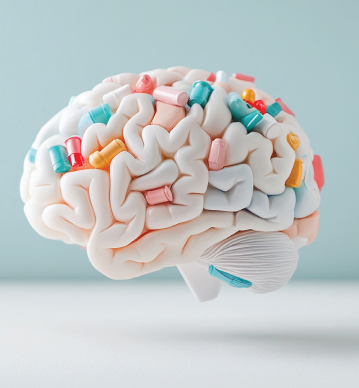
Ingestion of contaminated food and water is thought to be the primary source of exposure, with daily intake estimates ranging from 200 to 100,000 particles depending on diet and environment.1 After absorption from the digestive tract, microplastics can enter the lymphatic and circulatory systems and disseminate to virtually every organ, including the liver, vasculature, and brain.1
Research into the biological and health effects of microplastics remains in its infancy. Cell studies show that microplastics can induce oxidative stress, inflammation and apoptosis.1 Most existing in vivo data come from aquatic species, with only limited information available for mammals and even fewer data for humans. Since the early 2000s, several reports have documented the presence of microplastics in human tissues—including the liver, spleen, placenta, and, more recently, the brain.2-4 These findings have raised legitimate concerns that microplastics may pose real risks to human health. Yet accurately quantifying exposure in humans remains technically challenging, hampering large-scale epidemiological studies that could link exposure to disease.
A 2024 multicenter study offered an innovative approach by examining patients with significant carotid atherosclerotic stenosis—a group at high risk for vascular events.5 Researchers analyzed excised carotid plaques for 11 types of environmental microplastics. Polyethylene was most frequently detected, present in 58% of 304 patients, followed by polyvinyl chloride in 12%. Those with microplastics in their plaques had a 4.5-
fold higher risk of adverse cardiovascular or cerebrovascular outcomes over a 34-month follow-up.5 These findings suggest that microplastic accumulation could exacerbate vascular injury and worsen recovery after stroke or other vascular events,5 and this study exemplifies a new era of microplastic research that bridges environmental exposure to clinically relevant brain and cerebrovascular diseases.
Given that microplastics disrupt cellular homeostasis and accumulate in multiple organs, it is plausible that they contribute to the onset and progression of various brain and cerebrovascular disorders. To fully assess their health impact, we urgently need rigorous clinical and epidemiological studies capable of capturing both exposure and accumulation levels in humans. Such efforts will require technological advances in the detection and
quantification of microplastics in human tissues. We must also recognize that apparent associations may be confounded by copollutants or socioeconomic factors. Moving from correlation to causation will require preclinical models that accurately reproduce human exposure and disease mechanisms.
If plastics are now unavoidable in modern life, what can we realistically do? Some may argue that the damage is already done—that our bodies have accumulated microplastics beyond repair. This fatalistic view echoes early skepticism about airpollution control or tobacco regulation. Yet history shows that collective efforts can yield transformative benefits for future generations once scientific evidence compels action. Such transgenerational benefits are not limited to the mitigation of environmental or toxic exposure.
Cholesterol-lowering strategies, for example, are largely ineffective in reversing advanced atherosclerosis in those who have long consumed toxic levels of cholesterol, but they have proven crucial in preventing disease when instituted before the critical level of exposure. Their benefits were not fully realized in the generation that first developed anti-cholesterol therapies.
Thus, our efforts to understand and mitigate the effects of microplastic exposure may not immediately benefit the current generation. However, as with many environmental and medical advances, their true value may emerge over decades— safeguarding the health of generations to come. As physicians and citizens alike, we have a responsibility to future generations. By identifying risks, establishing causal mechanisms, and developing interventions, we can begin to mitigate the harms of microplastic exposure. Evidence and advocacy have changed the course of other public health crises and they can do so again. The challenge is immense, but so is our capacity for innovation and collective resolve.
References
- Landrigan PJ, Raps H, Cropper M, Bald C, Brunner M, Canonizado EM, Charles D, Chiles TC, Donohue MJ, Enck J, Fenichel P, Fleming LE, Ferrier-Pages C, Fordham R, Gozt A, Griffin C, Hahn ME, Haryanto B, Hixson R, Ianelli H, James BD, Kumar P, Laborde A, Law KL, Martin K, Mu J, Mulders Y, Mustapha A, Niu J, Pahl S, Park Y, Pedrotti ML, Pitt JA, Ruchirawat M, Seewoo BJ, Spring M, Stegeman JJ, Suk W, Symeonides C, Takada H, Thompson RC, Vicini A, Wang Z, Whitman E, Wirth D, Wolff M, Yousuf AK, Dunlop S. The Minderoo-Monaco Commission on Plastics and Human Health. Ann Glob Health. 2023;89(1):23. PMID: 36969097. PMC10038118
- Ragusa A, Svelato A, Santacroce C, Catalano P, Notarstefano V, Carnevali O, Papa F, Rongioletti MCA, Baiocco F, Draghi S, D’Amore E, Rinaldo D, Matta M, Giorgini E. Plasticenta: First evidence of microplastics in human placenta. Environ Int. 2021;146:106274. PMID: 33395930.
- Amato-Lourenco LF, Dantas KC, Junior GR, Paes VR, Ando RA, de Oliveira Freitas R, da Costa O, Rabelo RS, Soares Bispo KC, Carvalho-Oliveira R, Mauad T. Microplastics in the Olfactory Bulb of the Human Brain. JAMA Netw Open. 2024;7(9):e2440018. PMID: 39283733. PMC11406405.
- Nihart AJ, Garcia MA, El Hayek E, Liu R, Olewine M, Kingston JD, Castillo EF, Gullapalli RR, Howard T, Bleske B, Scott J, Gonzalez-Estrella J, Gross JM, Spilde M, Adolphi NL, Gallego DF, Jarrell HS, Dvorscak G, Zuluaga-Ruiz ME, West AB, Campen MJ. Bioaccumulation of microplastics in decedent human brains. Nat Med. 2025. PMID: 39901044.
- Marfella R, Prattichizzo F, Sardu C, Fulgenzi G, Graciotti L, Spadoni T, D’Onofrio N, Scisciola L, La Grotta R, Frige C, Pellegrini V, Municino M, Siniscalchi M, Spinetti F, Vigliotti G, Vecchione C, Carrizzo A, Accarino G, Squillante A, Spaziano G, Mirra D, Esposito R, Altieri S, Falco G, Fenti A, Galoppo S, Canzano S, Sasso FC, Matacchione G, Olivieri F, Ferraraccio F, Panarese I, Paolisso P, Barbato E, Lubritto C, Balestrieri ML, Mauro C, Caballero AE, Rajagopalan S, Ceriello A, D’Agostino B, Iovino P, Paolisso G. Microplastics and Nanoplastics in Atheromas and Cardiovascular Events. N Engl J Med. 2024;390(10):900-10. PMID: 38446676. PMC11009876.