


Over the last decade, neurosurgery has shifted from talking about “future technologies” to living with them in everyday practice. Imaging, navigation, intraoperative monitoring, and digital tools are now so deeply integrated into clinical workflows that it is difficult to separate innovation from routine care. At the same time, the rapid expansion of data science, artificial intelligence (AI), and digital health has created a new set of questions: which tools actually help, what is redundant, which remain experimental, and what skills neurosurgeons actually need to meaningfully shape these developments rather than simply react to them. Neurosurgery as a field has historically responded well to evolving landscapes, incorporating endovascular care into the specialty, adopting minimally and noninvasive means of tackling brain tumors, and building new paradigms for treating movement disorders. The rapidly growing AI field is no different, and its incorporation into the field needs to be cultivated by neurosurgeons with the knowledge and tools to do so in a way that amplifies our ability to care for our patients.
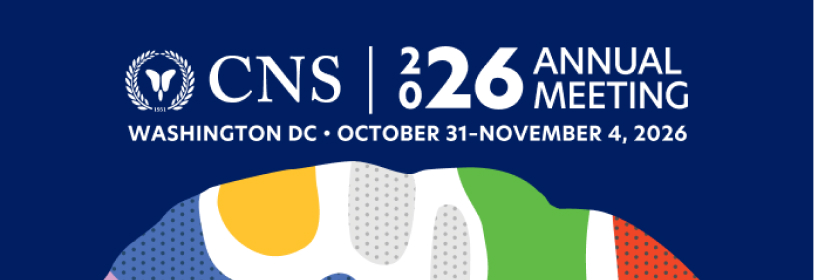
With the theme Evolution, the 2026 CNS Annual Meeting in Washington, DC takes these questions seriously. Building on the success of recent innovation and data science programming, this year’s meeting will highlight not only novel technologies but also the culture, infrastructure, and skillsets needed to make them work in real neurosurgical environments. The goal is to move beyond fascination with new tools and toward a more mature, critical, and practical relationship with AI, digital health, and cutting-edge innovations.
From data-driven neurosurgery to digital fluency
Recent CNS Annual Meetings have laid important groundwork for this year’s focus. Previous programs introduced attendees to advanced healthcare analytics, data science methods, and the vision of a data-driven neurosurgery through offerings such as the “Transforming Neurosurgery through Technology (TNT) Symposium” and dedicated data science sessions. Those experiences emphasized that understanding data science is no longer optional. For modern neurosurgeons, fluency in basic concepts—data quality, model building, validation, bias, and implementation—is now part of what it means to practice evidence-based medicine.
That foundation continues in 2026. Once again, the meeting will feature a CNS Data Science Symposium, designed to bring neurosurgeons closer to the methods and tools that increasingly shape clinical research and quality improvement. Faculty will walk through examples of how large neurosurgical datasets are being used to build and test predictive models, evaluate interventions, and generate new hypotheses that can be taken back to the lab or the operating room. Attendees will have opportunities to see the full pipeline: from raw data to cleaned datasets, from models to interpretable outputs, and from research findings to practical changes in care pathways.
The emphasis is not on turning every neurosurgeon into a data scientist, but on giving them enough understanding to be discerning users and collaborators with these emerging tools. Akin to understanding how to interpret clinical trial design and translational research methods, neurosurgeons can more effectively evaluate published literature that relies on complex deep-learning analytic methods, apply these tools to daily practice, partner with data science teams in their own institutions, and advocate for resources that support robust data infrastructure in their departments.
Transforming Neurosurgery through Technology
A dedicated neurosurgical innovation symposium will again serve as a flagship venue for exploring hardware and software developments that are reshaping the neurosurgical landscape. Past meetings have highlighted new devices, surgical platforms, and digital tools that challenge traditional assumptions about what is possible in the operating room and beyond. This year, the innovation programming will once again bring together clinicians, engineers, and industry partners to discuss everything from robotics and extended-reality platforms to novel imaging techniques and intraoperative decision-support systems. This year’s symposium will feature dedicated sections on tumor, vascular, spine, trauma, and functional specialties, allowing attendees to target high-yield opportunities tailored to their daily practice.
The unifying question is how these technologies can meaningfully improve safety, efficiency, and patient outcomes. Attendees can expect presentations that move quickly from concept to application: where things work well, where they still struggle, and what adoption looks like in different practice settings. By featuring faculty who have navigated the full innovation pathway—from idea to prototype, from trials to implementation—the symposium offers a realistic picture of what it takes to turn a promising technology into a reliable clinical tool. Integrated with the new CNS Innovation Institute fellowship program, this symposium will focus on both understanding and integration of novel tools into practice and will lay the groundwork for building the next wave of neurosurgical innovators.
For residents, fellows, and early-career neurosurgeons, the innovation programming also serves as a window into the broader ecosystem. Discussions often touch on issues such as intellectual property, regulatory strategy, reimbursement, and partnerships with industry—topics that are increasingly relevant for neurosurgeons who want to bring forward new ideas while maintaining scientific rigor and ethical standards. In this way, the meeting reinforces the idea that innovation is not a side project, but part of the profession’s core responsibility.
Beyond the hype: AI that actually helps
One of the most distinctive elements of this year’s program is a symposium focused explicitly on practical AI: SYM13: “Beyond the Hype: AI Tools that Actually Help Neurosurgeons.” AI has been a constant topic in medicine, and CNS has been building AI-focused programming over several meetings. SYM13 is the next step in that evolution—a focused, practice-oriented conversation about applications that are already delivering value in neurosurgical care.
Faculty will present concrete examples of how AI is being used to streamline documentation, assist with preoperative planning, support imaging interpretation, triage communication, and inform patient counseling. The emphasis will be on tools that neurosurgeons can realistically adopt in their own settings, including a frank discussion of requirements, limitations, and failure modes. Rather than showcasing speculative algorithms that are years away from clinical deployment, the symposium will highlight workflows that are in use today and the incremental changes that have made those tools sustainable.
Equally important, this session will address the human side of AI integration. How should neurosurgeons communicate with patients about AI-assisted tools? What are the implications for training and supervision? How can departments ensure that algorithms are monitored for fairness, bias, and performance over time? By framing AI as a set of evolving practices rather than a single technology, SYM13 fits squarely within the broader Evolution theme and complements the more technically focused data science content elsewhere.
Digital health and the neurosurgical ecosystem
Innovation at the CNS Annual Meeting now extends well beyond the operating room. Digital health tools—remote monitoring, virtual visits, patient facing apps, and integrated care pathways—are increasingly part of how neurosurgery is delivered, especially in spine, tumor, and functional practice. This year’s programming will explore how to use those tools to create a more continuous, data-rich view of patient experience before and after procedures.
Sessions will address practical topics such as designing digital follow-up pathways, integrating patient-reported outcomes into routine practice, and using remote monitoring data to flag early signs of complications or functional decline. For many neurosurgeons, these conversations are less about technology for its own sake and more about solving persistent problems: missed appointments, fragmented communication, uneven access to care, and the challenge of tracking long-term outcomes in a busy practice.
Innovation in digital health also raises questions about workload and well-being. The meeting will tackle this directly by asking how digital tools can reduce friction and administrative burden rather than add to it. Examples may include smarter scheduling systems, automated data capture for registries, and thoughtful use of templates and decision-support tools that respect clinicians’ time and judgment. In this way, digital health is framed not only as a way to extend care to patients but also as a way to make neurosurgeons’ working lives more sustainable.
An evolving mindset
Taken together, the innovation, AI, and digital health offerings at the 2026 CNS Annual Meeting reflect a maturing mindset. The focus is shifting from “What is new?” to “What works, and how do we make it part of everyday practice?” Data science is less of a niche interest and more of a foundational competency. AI is moving from hype to utility, evaluated on whether it actually helps neurosurgeons and their patients. Digital health is being treated not as an add-on, but as part of the neurosurgical ecosystem that can strengthen follow-up, extend reach, and illuminate outcomes.
This is exactly the kind of evolution the meeting theme highlights. By pairing returning pillars like the Data Science Symposium and neurosurgical innovation programming with a new, highly practical AI session, the CNS Annual Meeting offers attendees a coherent path from curiosity to literacy to confident use. For neurosurgeons at any career stage—whether they are building models, testing new devices, or simply trying to choose wisely among emerging tools—the innovation and AI program in Washington, DC, will provide both the big-picture framing and the concrete examples needed to move forward.
